

.jpg?XrW8wYMN.TWqf8Su6ZyuXHm4DGqazGkT)
This or That? Common Puppy Training Pitfalls and How to Avoid Them
You may have been following along the Journal of Miss Hedy Pawmarr, but if not...here’s the TL;DR ~ a new puppy just joined our family (the absolutely Pawdorable Boston Terrier puppy seen in this post) and the timing (right before Christmas) and the circumstances (pandemic, toddler, new house, hand surgery, running a business) meant that I needed to call in reinforcements to help control the chaos!
So I enlisted the help of my good friend, Robin Bennet, a dog training expert, to guide me, and I’m also using her excellent online course, Raising Your Puppy.
Now, I’ve raised puppies before, but I’ve made mistakes along the way...like...a LOT of them. I am determined this time not to fall prey to those pitfalls (Ha! Too late!), and so I’ve asked Robin to help us build a “Do This, Not That” guide to the mistakes most common in puppy training (at least if your name is Lorien). So without further ado...
Where should my puppy sleep at night?
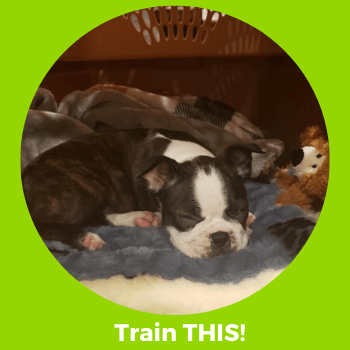
Puppy ALWAYS sleeps in the crate at night, preferably in the same room as you, until house training is 100% successful.
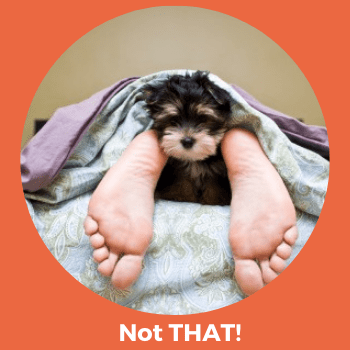
Allowing the puppy to sleep in your bed, on an unsecured dog bed, or in an isolated room away from you (outside of a crate) during the first months (before successful house training)
Robin tells us why
The first few nights are the hardest, and humans are hard-wired to be sympathetic to cries from the young, but you need to set the puppy up for success. Before bedtime, make sure you tire them out and let them fully explore their new space (with supervision), the first few days they are home. Make sure they’ve had time RIGHT before bed to go potty. Also, ideally, all day on the first day, you should work on familiarizing them with the crate—tossing treats in so they can explore and leave as they wish —so they don’t fear the crate, but see it as a safe place to be (with treats!).
At bedtime, you want to have a piece of fabric from the breeder or shelter that smells like the littermates, and/or something warm like a hot water bottle. Have the crate close to your bed, so it is easy to stick your fingers in so they know you are near. The first few days, you are likely to get a bit of crying, but it is critical to tough it out so the puppy feels comfortable and secure in their crate, and develop critical life skills that they can be alone and cope. Petmate makes excellent high-quality crates aimed at creating a safe and relaxing space for your pet at bedtime or when you leave the house and they need to be created.
How should I train my puppy not to bite?
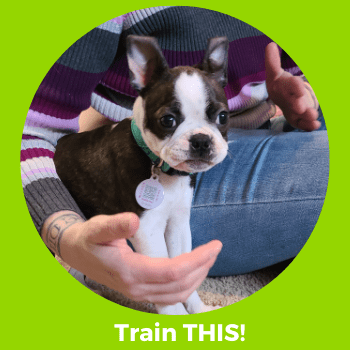
Yip and pull your hand/body part away dramatically, or (if possible) redirect the puppy to a chew toy when they nip at you
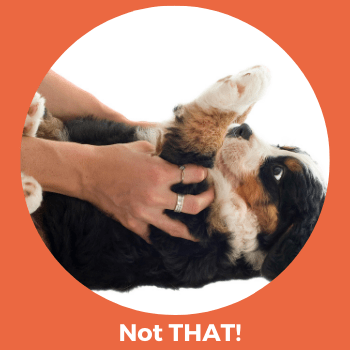
Flip over the dog to show your dominance (“alpha rollover”) or in anyway scold or punish them for nipping
Robin tells us why
Dominance or disciplinary training for nipping and biting only trains the dog to (1) hide behavior that might otherwise be a warning that they are unhappy and thinking of biting, or (2) that they just can’t bite and nip YOU. With those techniques, you aren’t teaching them what TO DO, but rather what not to do.
Puppies explore the world with their mouths. Loud noises and pulling away, and even leaving the area, will reinforce the idea of “oh, the playing and fun stops when I bite,” which is how their littermates would react in natural play (they yip and then move away). Puppies that are teething have sore gums that are craving to chew, so it is a good idea to have chew toys nearby to “replace” your body parts from chewing!
How do I get my puppy to "mind" (and respect) me?
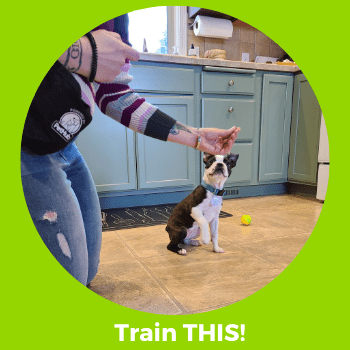
Reinforce positive, desired behaviors with tasty treats, praise, and attention. Interrupt unwanted behavior with a neutral distraction like a sound or clap, then redirect to the desired behavior.

Disciplining poor behavior with physical or verbal punishment, or using domination techniques to get the puppy to “mind” will not help build a bond of trust and respect
Robin tells us why
It’s all about building relationships. Yelling at anyone or being pushy isn’t good for relationships. Would you want to hang around someone who flipped you over on your back or yelled and disciplined you all the time? Probably not, it would certainly not be a relationship built on mutual trust, respect, and admiration, but rather one based on fear.
Anything hurtful or emotionally hard for the dog isn’t a good way to build the relationship, so always keep that in mind. There are so many ways to “get the job done” that won’t hurt your relationship with your dog; always opt for positive reinforcement techniques.
How do I train my puppy not to jump up on people?
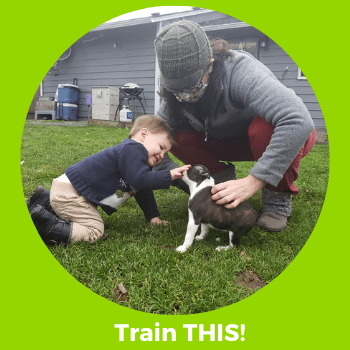
“Four on the Floor” before any petting or attention
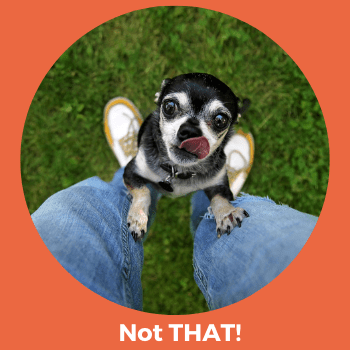
Petting or paying attention to a puppy who is putting their paws on you or jumping up
Robin tells us why
Getting this right is the foundation of everything you do with your puppy: if a behavior is followed by something the dog likes, they’re more likely to repeat it.So if they jump up or put their paws on you (and every puppy in the world is adorable when they do it), and then you pet them, or worse, pick them up and cuddle them... well, they really enjoy that, and they just learned jumping up or pawing you is the way to get that.
It is so benign when they are tiny, but as they get bigger, one of three things will happen:
(1) They are tiny all their lives, and then they start to have to get “air” and jump really high -- Bostons do this!
(2) Bigger dogs will have a habit of jumping on people to get their attention and affection, which is annoying at best.
(3) And REALLY big dogs can actually cause bodily harm and knock you over when they jump up.
So you really have to think about what behavior will be acceptable when they are fully grown -- and that’s not likely to be jumping up. Go for the general rule of “all four paws on the floor” or even a full “sit” before the dog gets pet or picked up. Ignore them otherwise. It’s best to actually turn your back on that behavior, or leave the area if you can, so they really get “when I jump up, I don’t get anything fun or pleasing.” But the moment they have all four on the floor or sit, lavish them with praise and cuddles.
How do I keep my puppy from running away when it's time to come inside?
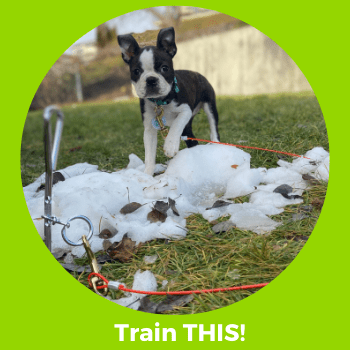
Use a long line (15-20’) in the backyard during potty breaks and practice “come” in ways that don’t always mean “playtime ends” when you struggle to get your dog to come inside when they need to
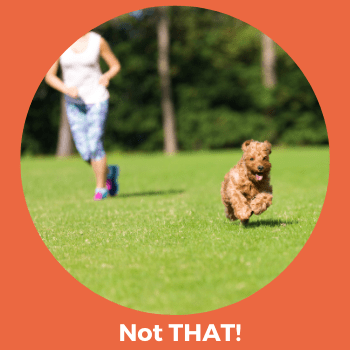
Chase your dog to get them to come in/stop behavior, or train “come” to mean that the puppy has to come inside (e.g., outside fun time ends)
Robin tells us why
Before they have really had a chance to learn a true “recall” command, it’s best to manage the situation by having your puppy on a long line or leash, especially if it's dark out and you literally just want her to go out to the bathroom and come back in.
If the puppy doesn't go to the bathroom, you can at least stop her from running by stepping on the long line and practicing the recall (bring treats to all potty breaks for training opportunities!).
The other thing is to really make sure that when you are calling her, it doesn't always mean her fun ends. That's probably the biggest reason that most puppies will figure out, “Oh, every time they call me and I'm outside, I gotta go in, and I don't want to do that.” So do a lot of games where you're calling your puppy and giving her lots of treats and praise. Then you let her go play again out in the yard, so it doesn't become a signal that all the fun ends.
How do I get my distracted puppy to listen to me?
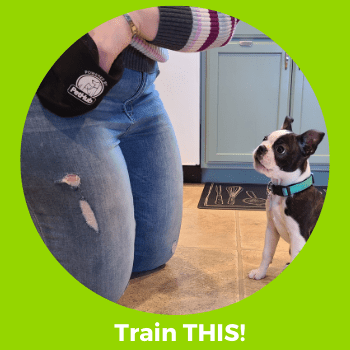
Give the command, pause for 2 or 3 seconds, then try again. If they still don’t get it after a few attempts, the task may be too difficult, so lower your expectations and switch to something easier.
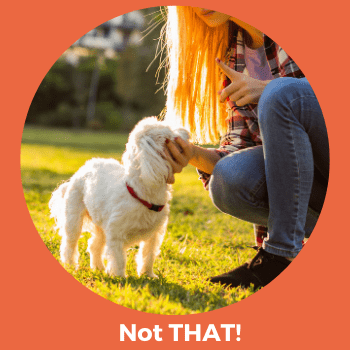
Repeating the command over and over when they don’t understand, then scolding them for not doing the desired behavior.
Robin tells us why
Much of training is about setting your dog up for success. Dogs don’t generalize well, so if you train in the kitchen, for example, they may learn to sit perfectly there but not in other rooms or around distractions.
So by gradually adding in distractions (difficulty), you will be setting them up for success. If your puppy isn’t responding, and you have to repeat the command, pause and count to two or three seconds. If you really think the dog is blowing you off, I would also make sure she realizes she loses the chance for reinforcement.
For example, if you have a dog who gets overly excited and out of control when the leash comes out, drop the leash and walk away. All of a sudden, your puppy will realize, “Wait a minute, I don't know what happened, but I just lost the chance to go outside.” Do that consistently, and they will learn they have to stay calm to go out on the leash. Same with training. If you have treats in your hand and they aren’t paying attention during training, you put the treats away. Training (and treat opportunity) session ends. She will quickly learn that her opportunity to get treats depends on her listening to you.
How do I protect my puppy from hurting themselves with high furniture?
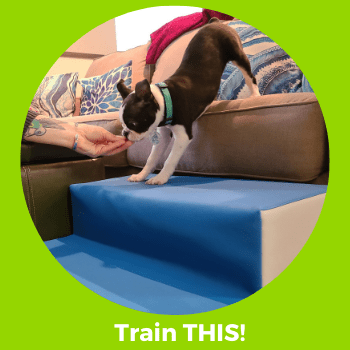
Give small dogs/puppies a way to safely climb up on “allowed” higher furniture (beds, couches) so they will not be as inclined to jump and injure themselves. For example, PetSafe offers a wide range of dog steps and stairs in their pet mobility section.

Place puppies (especially smaller ones) on high furniture and allow them to jump, or fall (or, worse, train) them to jump down
Robin tells us why
Some puppies (like Boston Terriers!) are fearless, and if you put them up on something high, they are likely to immediately think, “Whoo! I’m gonna jump off this thing!” and likely hurt themselves unintentionally.
You’ll have other types of dogs that will be afraid of things like heights, and putting them up high as a puppy reinforces that fear if they fall off. The more wriggly the puppy, the greater the risk of injury.
So I recommend keeping young puppies off anything they could fall or jump from and potentially hurt themselves.
You can use this opportunity to teach your dog several things: safe entry and exit from furniture using a small step, that they need permission to get on furniture, and to respect the command to get down. Teaching proper furniture rules as a puppy will pay off as your dog grows older.
In addition, children should always handle puppies on the floor to reduce the risk of a wriggling puppy falling or jumping and resulting in subsequent injury.
How do I keep my puppy from chewing up all of my stuff?
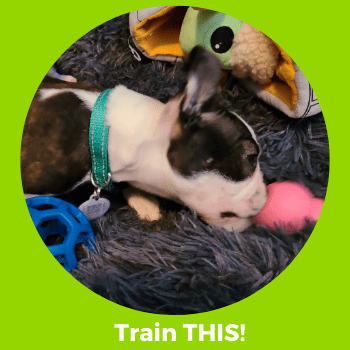
Provide constant supervision and plenty of appropriate chew toys to keep your puppy engaged, such as options from Patchwork Pet. You can also consider a subscription like BarkBox, which delivers new toys and treats each month to keep your pup excited and mentally stimulated.
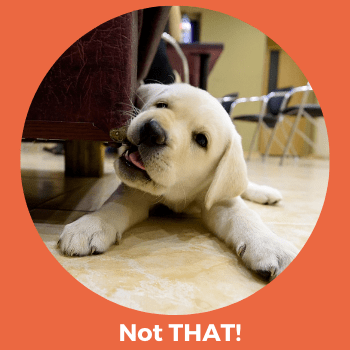
Allow puppies “free roam” of the house where they can potentially chew on non-chew toys without opportunities for redirection
Robin tells us why
The biggest thing about teaching your puppy proper chewing etiquette is supervision, supervision, supervision. It's not just enough for them to be in the same room, you have to actually know what they're doing in that room. They are going to chew on the wrong stuff sometimes because they have no idea, and that's part of what they're learning as a puppy.
Make sure your puppy has a variety of appropriate things they’re allowed to chew. Choose smaller, softer toys that are pliable enough for them to bite into, especially during teething when they need relief from mouth discomfort. You can also try soaking a toy in broth and freezing it to help soothe sore gums. Now, If you catch them chewing on the wrong item, calmly say “No” and immediately offer an appropriate toy instead, reinforcing what they can chew. For persistent problem areas like rugs or baseboards, a pet-safe bitter spray can help deter chewing. While this works for many dogs, some may ignore the taste, so consistent supervision and redirection are still essential.
How do I help my puppy learn to like grooming, teeth brushing and other activities that involve handling?
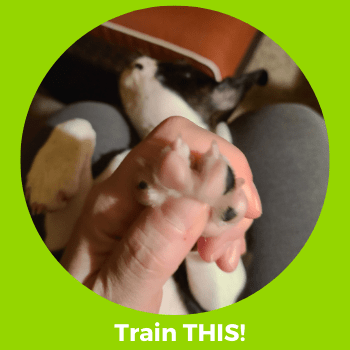
Play gentle handling games from nose to tail two to three times a day with a tired, relaxed puppy. Use treats, praise, and cuddly positive reinforcement to help them get comfortable with the kinds of handling they’ll experience at the vet, groomer, and at home, like tooth brushing.

Waiting to let “professionals” handle your dog or putting off rituals like daily teeth cleaning, brushing, bathing, nail care, etc., until they “really need it” can be a recipe for life-long anxiety and even aggression with handling
Robin tells us why
Tip-to-tail handling should start as soon as you bring your puppy home. You’re preparing them for the reality that you, veterinarians, and groomers will be touching their mouths, ears, paws, tail area, and more.
So Each day, practice gentle, positive handling as part of normal routines like feeding. Use your puppy’s kibble or small treats while you lift an ear to look inside, hold and rub their paws, touch their nails, examine their mouth, or gently handle their tummy and tail area. This helps them associate being handled with good experiences.
And a great time to do this is when your puppy is already tired and relaxed, such as during cuddle time in your lap. As they become comfortable, you can slowly introduce tools like nail clippers, a Dremel, or a toothbrush by simply holding them while giving treats, without using them right away. Gradually work up to the actual grooming tasks, always pairing them with positive reinforcement so your puppy learns these experiences are safe and rewarding.
This post is part of the Bringing Hedy Home series, which chronicles the journey of bringing a new puppy into your life. In this series, PetHub's COO, Lorien, shares all of the joys (and terrors) that come with sharing your home with a puppy and provides some of the lessons she has learned in her lifetime of being a pet parent.
This post features insights from Robin Bennett, from The Dog Gurus, and instructor of the Raising Your Puppy course. Raising Your Puppy is the ultimate online video guide to your puppy’s first 6 months is designed for busy pet parents and their newest bundle of joy. Break through the chaos of puppyhood and get your puppy started off on the right paw in just 10 minutes per day. Sign up today!